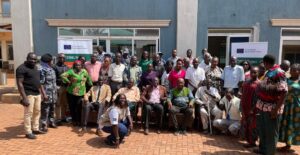
EVE Organization for Women Development, in partnership with CARE International and STEWARDWOMEN, with financial support from the European Union (EU), has officially launched the Stronger Together: Resilient, Inclusive and Networked Civil Society Organizations for Gender Equality in South Sudan (STRING) Project in Yambio, Western Equatoria State.
The launch, held on 9 November 2026 at Tourist Hotel in Yambio, brought together representatives from the State Ministry of Gender, Child and Social Welfare, the State Legislative Assembly, law enforcement institutions, civil society organizations (CSOs), women-led organizations (WLOs), community leaders, and other key stakeholders.
The STRING Project aims to strengthen the institutional and technical capacities of civil society organizations, particularly women-led and women’s rights organizations, to advance gender equality, promote women’s empowerment, and contribute to the prevention and response to Sexual and Gender-Based Violence (SGBV).
The event marked an important milestone in strengthening locally led efforts to advance gender equality, promote women’s leadership, and address Sexual and Gender-Based Violence (SGBV) through institutional capacity strengthening, advocacy, and coordinated action.
EVE Reaffirms Its Commitment to Locally Led Change
Delivering opening remarks on behalf of EVE’s Executive Director, Emmy Luka the program Manager Western Equatoria welcomed participants and described the launch as a significant milestone in the organization’s continued efforts to advance women’s rights and strengthen civil society leadership in South Sudan.
She emphasized that civil society organizations remain central to community development, social justice, and the promotion of gender equality, particularly in communities where women and girls continue to face barriers to meaningful participation and access to opportunities.
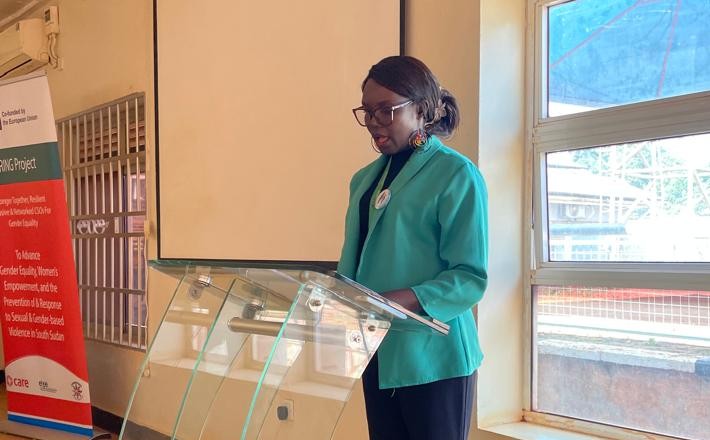
“Civil society organizations are the very heartbeat of community development and social justice,” she stated, highlighting the importance of investing in local institutions as drivers of sustainable change.
Emmy explained that the STRING Project is designed to equip civil society and women-led organizations with the knowledge, skills, institutional systems, and networks needed to champion women’s rights, strengthen local leadership, and contribute effectively to preventing and responding to gender-based violence.
She further acknowledged the European Union’s financial support and the collective commitment of CARE International, EVE, and STEWARDWOMEN to building a safer, more equitable, and inclusive future for women and girls across South Sudan.
Her remarks reinforced EVE’s belief that strengthening local organizations is essential to ensuring that communities are not merely recipients of development interventions but active leaders in shaping solutions to the challenges they face.
Government Calls for Stronger Commitment to Ending SGBV
Speaking during the official launch, Hon. Rev. John Zebwruna, Director General at the State Ministry of Gender, Child and Social Welfare, expressed his appreciation to EVE Organization for Women Development and its consortium partners for introducing the STRING Project in Western Equatoria State.
He commended the initiative for prioritizing the institutional strengthening of civil society and women-led organizations, recognizing their important role in promoting gender equality and addressing violence against women and girls.
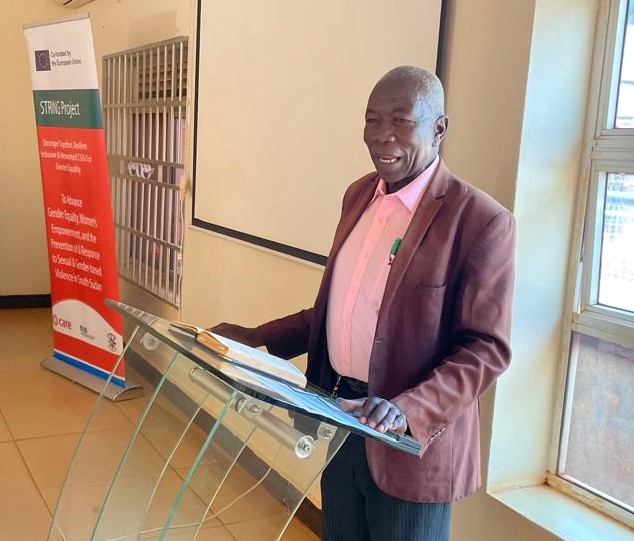
In his remarks, Hon. Rev. Zebwruna encouraged CSOs and WLOs to reaffirm their commitment to the project’s objectives and work collectively towards reducing and ultimately eliminating Sexual and Gender-Based Violence in Yambio and surrounding communities.
Presenting the project’s vision, Farida Amoi, STRING Project Manager at CARE International South Sudan, emphasized that the initiative is designed to strengthen the institutional and technical capacities of civil society organizations, women-led organizations, and relevant local government institutions to advance gender equality and effectively address SGBV.
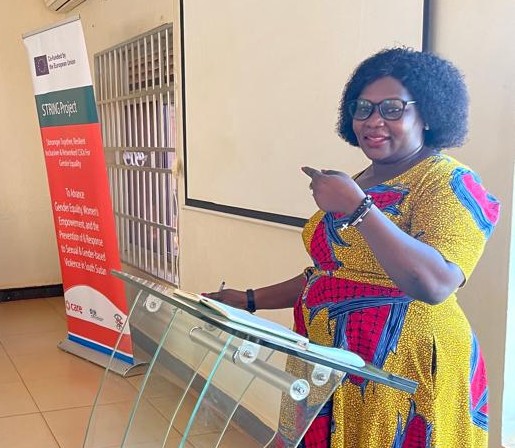
She explained that the project’s approach focuses on developing the skills, knowledge, and institutional capacities of local actors to enable them to independently design, implement, and sustain interventions that respond to community needs.
Using the familiar analogy of teaching people how to fish rather than simply giving them fish, Farida illustrated the project’s emphasis on long-term capacity development.
She stated that the STRING Project seeks to equip local organizations
and institutions with the tools and expertise needed to become effective agents of change, enabling them to use their strengthened capacities to deliver meaningful support and solutions to communities.
Her message underscored the importance of moving beyond short-term interventions towards sustainable, locally driven approaches that strengthen institutional resilience, ownership, and accountability.
EVE Highlights Women’s Leadership, Local Ownership, and Sustainable Impact
Reflecting on the significance of the project for Western Equatoria State, Kiko Evaline, STRING Project Manager at EVE Organization for Women Development, reaffirmed the organization’s commitment to strengthening locally led initiatives that advance gender equality, women’s empowerment, and the prevention of Sexual and Gender-Based Violence.
“At EVE Organization for Women Development, we believe that sustainable change begins when women and local organizations are empowered to lead the solutions that affect their lives and communities. Through our work with women and girls, we have witnessed their resilience, leadership, and determination to overcome the barriers that limit their opportunities and participation.”
She emphasized that the STRING Project provides an opportunity to build on EVE’s existing community-based interventions by strengthening the capacities of local organizations, amplifying women’s voices, and creating stronger connections between communities and decision-makers.
“Our commitment is not simply to strengthen organizations, but to ensure that these organizations become influential, accountable, and sustainable agents of change, capable of advancing women’s rights and addressing gender-based violence long beyond the project’s implementation period.”
Kiko further emphasized that the project’s success should be reflected not only in the number of organizations trained or capacities developed, but also in the extent to which those investments translate into stronger institutions, meaningful participation of women in decision-making, and lasting improvements in the lives of women and girls across Western Equatoria State.
Her reflections highlighted EVE’s continued commitment to ensuring that local women-led organizations have the capacity, confidence, and opportunities to influence policies, advocate for their communities, and contribute to sustainable development.
Strengthening Collaboration and Collective Accountability.
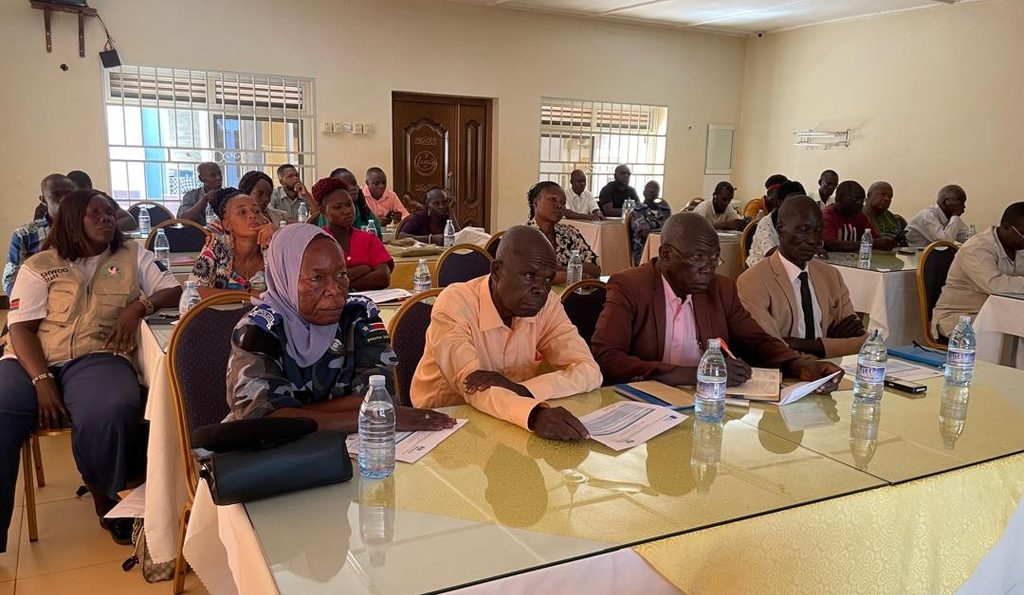
The launch provided a platform for participating stakeholders to gain a shared understanding of the project’s objectives, expected results, implementation approaches, and opportunities for collaboration.
Through plenary discussions, questions and answers, and stakeholder reflections, participants explored the importance of strengthening institutional coordination, improving gender-responsive programming, and promoting women’s meaningful participation in governance and decision-making processes.
The discussions reinforced the importance of partnerships that connect community-level organizations with government institutions and other development actors, ensuring that interventions are inclusive, responsive, and sustainable.
Building a Stronger Civil Society for Gender Equality in South Sudan.
The STRING Project is a three-year initiative running from September 2026 to August 2029, implemented by a consortium led by CARE in partnership with EVE Organization for Women Development and STEWARDWOMEN, with financial support from the European Union.
The project seeks to strengthen the resilience, institutional capacities, networks, and influence of civil society organizations, particularly women-led and women’s rights organizations, to advance gender equality, promote accountability, and support meaningful participation in decision-making processes.
For EVE Organization for Women Development, the launch represents an important continuation of its work in empowering women and girls, strengthening community-based protection systems, promoting women’s leadership, and supporting locally driven approaches to addressing gender inequality and violence.
As the project moves into implementation, EVE and its consortium partners will work closely with civil society organizations, government institutions, and communities to translate the project’s objectives into meaningful and sustainable results.
The launch of the STRING Project in Yambio signals a shared commitment to building a stronger, more resilient, and inclusive civil society where women-led organizations are empowered to lead change, influence decisions, and contribute to a future free from gender-based violence.
EVE extends its appreciation to the European Union for its financial support, CARE International and STEWARDWOMEN for their partnership, the State Ministry of Gender, Child and Social Welfare for its leadership, and all stakeholders for their participation and commitment to advancing gender equality in Western Equatoria State.