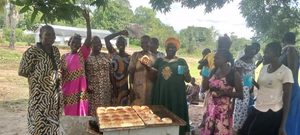
EVE Organization for Women Development with funds from UNICEF introduced bread-making into its life-skills activities in Greater Mundri, creating new opportunities for women to develop practical skills and explore ways to support their families.
As women working to improve their families’ well-being, learning a new skill can be about more than what they can make. It can also be about what that skill may make possible for their future.
For women participating in life-skills activities implemented by EVE, bread-making is opening up another avenue to explore livelihood opportunities while building on skills they have already acquired.
Before bread-making was introduced, women and girls were engaged in activities such as bedsheet-making, crocheting and producing other items. These skills remain valuable, offering opportunities for creativity, structured engagement, social interaction and, potentially, income generation. However, as Loice Adu from Lui Payam explained, completing a bedsheet can take up to two months.
But bread-making presents a different opportunity. Because bread can be produced within a shorter period and is consumed daily, we can explore producing goods for sale more frequently, depending on access to ingredients, equipment and customers.
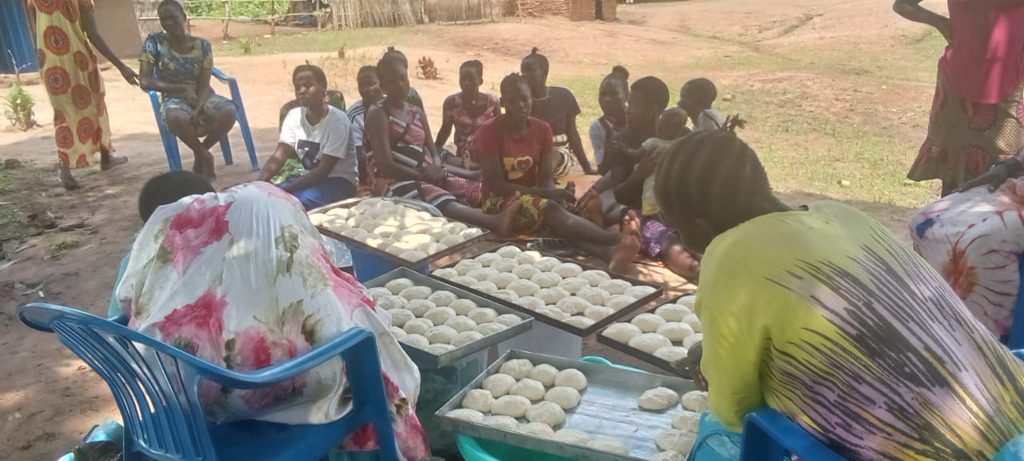
Women participating in bread-making activities in WGFs Lui Payam.
A New Skill, A Different Opportunity
For Esther Sister also said that, the appeal of bread-making lies in the possibility of turning practical knowledge into something that may help meet her family’s everyday needs.
“The skills we acquired in making bedsheets and other products are also valuable, but food production, particularly bread-making, stands out because it offers a quicker opportunity to produce goods for sale. Making bedsheets can take up to two months before a product is completed, while bread can be produced more quickly and sold to meet the daily demand Esther said.
This gives us an opportunity to generate income more frequently and use the profits to put food on the table for our families. We are grateful to EVE for introducing a practical skill that we believe can help us improve our livelihoods and work towards greater financial independence,” she added.
Her experience highlights an important consideration in livelihood skills development: the time required to produce an item and the opportunities available to sell it can influence how participants put their skills to use.
For the women involved, bread-making is not necessarily a replacement for bedsheet-making or other handicrafts. Rather, it adds another practical skill to their existing abilities, offering a different production process and the potential to respond to regular consumer demand.
Building on Skills That Support Well-being
The value of life-skills activities extends beyond the products participants make. Activities such as bedsheet-making and other handicrafts can provide opportunities for creative expression, routine, concentration and interaction with others. Where incorporated into psychosocial support programming, these activities can contribute to an environment in which participants engage constructively, develop confidence and practise new skills.
Bread-making builds on this foundation by introducing food production as another practical option. It connects learning with an everyday product that participants may be able to produce for household use or, where resources and market conditions allow, explore as a small-scale business.
However, turning a skill into a reliable source of income requires more than training alone. Access to ingredients, equipment, working capital, business knowledge and customers can influence whether participants are able to make regular sales and generate a profit.
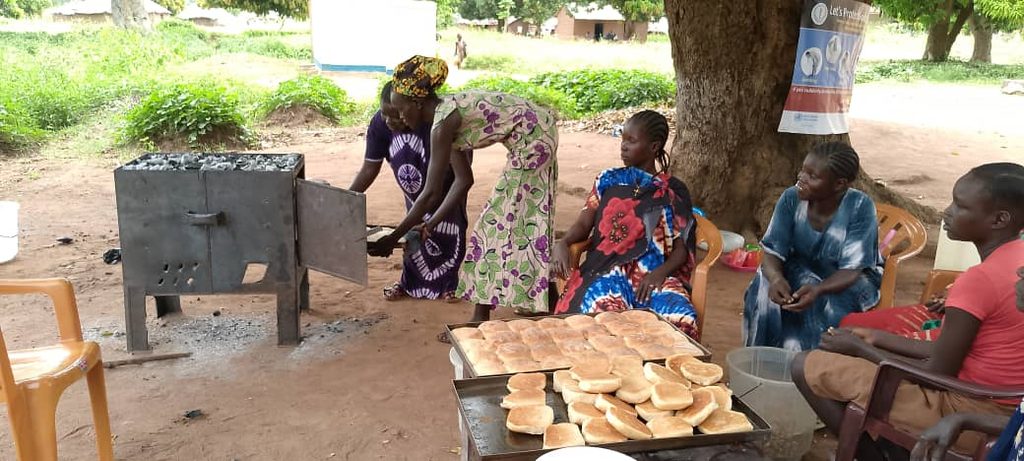
Bread-making adds food production to the practical skills available to women participating in WGFs Mundri Town.
Creating Opportunities for Greater Self-Reliance
Through its partnership with UNICEF, EVE Organization is supporting opportunities for women to develop practical skills that may contribute to their personal growth and livelihood aspirations. The introduction of bread-making in July 2026 expanded the range of activities available to participants, building on existing skills while introducing another potential route towards income generation.
Women seeking ways to contribute to their households, the opportunity to learn, practice and potentially sell what they produce can be an important starting point. Whether bread-making develops into a sustainable business will depend on the resources and market opportunities available, but the skill gives the women another option to explore.
For the woman who sees potential in bread-making, the aspiration is straightforward: to put what she has learned to practical use, earn an income and contribute to feeding her family.
With UNICEF’s support, EVE is expanding life-skills opportunities that recognize women’s existing abilities while creating space for new learning. Bread-making represents one more step in that process connecting practical skills with women’s aspirations for greater self-reliance and improved household well-being in Greater Mundri.
EVE Organization remains committed to improving women and girls in South Sudan, supporting their empowerment and their ability to reach their full potential.