
IDP Women and adolescent girls in Greater Mundri are increasingly turning hardship into opportunity as they rebuild their lives through livelihood skills training and income-generating activities implemented by EVE Organization for Women Development, with funding from the South Sudan Humanitarian Fund.
The initiative is part of a broader Provision of Emergency Protection Services to Conflict-Affected Populations in Greater Mundri, aimed at addressing urgent protection gaps among internally displaced persons (IDPs) in Mundri East and Mundri West.
What began as a humanitarian livelihood intervention is now evolving into a source of income, dignity, and local economic activity for hundreds of women who were previously without stable livelihoods due to conflict and displacement.
For many families affected by conflict, access to basic income remains a daily struggle. Through targeted livelihood support, women are now beginning to earn small but meaningful incomes that contribute to household survival, dignity, and stability.
Livelihood Skills Training for Women and Adolescent Girls in Greater Mundri
A total of 450 women and adolescent girls across Greater Mundri have been enrolled in income-generating activities including bed knitting, tablecloth making, liquid soap production, and sponge making. The intervention aims to strengthen household resilience while equipping women with practical, marketable skills that can sustain them beyond project support.
Soap Making Improves Women’s Income in Mundri West
Among the participants are 80 internally displaced women in Mundri West, organized into four groups and trained in liquid soap production. After receiving startup materials, the women collectively produced 150 liters of liquid soap, which they sold within their communities, generating approximately 614,500 South Sudanese Pounds (SSP).
The results have not only provided immediate income but have also encouraged women to continue using their skills to support their families. Many have reinvested part of their earnings into purchasing additional materials, allowing them to sustain and gradually expand soap production beyond initial project support.
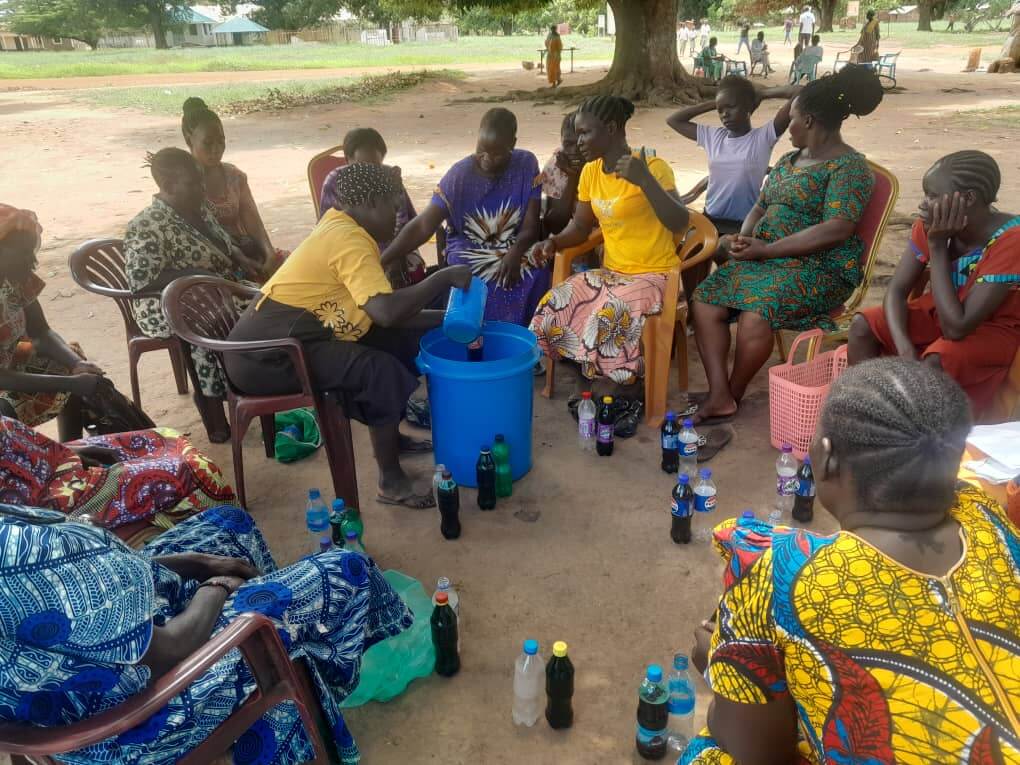
Women from Group One measure liquid soap produced through livelihood skills training in Mundri West.
The group leader, Lona Zibnai explained:
“We did not just spend the money we earned. We agreed as a group to reinvest part of it so that we can buy more materials and continue producing soap. This has helped us keep the work going and even increase what we are able to produce.”
Psychosocial Support (PSS) and Trauma Healing Through Livelihood Activities
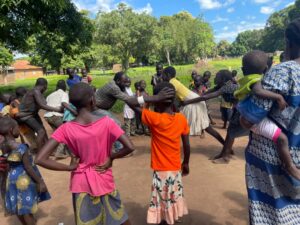
Beyond income generation, these livelihood activities are also contributing to psychosocial support and trauma healing for women and adolescent girls affected by displacement and conflict. The project complements this through safe spaces where psychosocial and social-emotional support activities are conducted in a structured and supportive environment.
Many participants have experienced loss, insecurity, and prolonged stress. Through structured group work and shared activities, women are finding space to express themselves, reduce isolation, and rebuild emotional strength.
Working together has helped participants regain confidence, restore a sense of normalcy, and improve self-worth as they engage in productive daily routines.
Grace Hayat, one of the beneficiaries, shared:
“These activities have really helped me. Before, I used to feel isolated and overwhelmed by what I had gone through, but working together with other women has helped me open up again. I feel more confident and I feel like I am healing slowly because I am not alone anymore.”
She further noted that being part of the group has helped her rebuild a sense of belonging and hope for the future of her children.
“These activities have really helped me. Before, I used to feel isolated and overwhelmed by what I had gone through, but working together with other women has helped me open up again. I feel more confident and I feel like I am healing slowly because I am not alone anymore.”
She added that being part of the group has helped her rebuild her sense of belonging and hope for the future of her children.
Women’s Economic Empowerment and Community Impact
Another beneficiary, Mary Abi, highlighted the growing demand for soap in her community:
“We need more materials so that I can continue producing and supplying soap on time. In my area, I am currently the only person selling liquid soap, and mothers who give birth come to buy from me because there is no soap available nearby.”
Her experience reflects both income generation and the importance of access to essential hygiene products in underserved communities.
IDP leader Rejoice Rambwa Bari shared similar experiences of recovery and change:
“We used to depend on others for everything ever since we left our places. Now I have learned how to make liquid soap and earn something to support my children.”
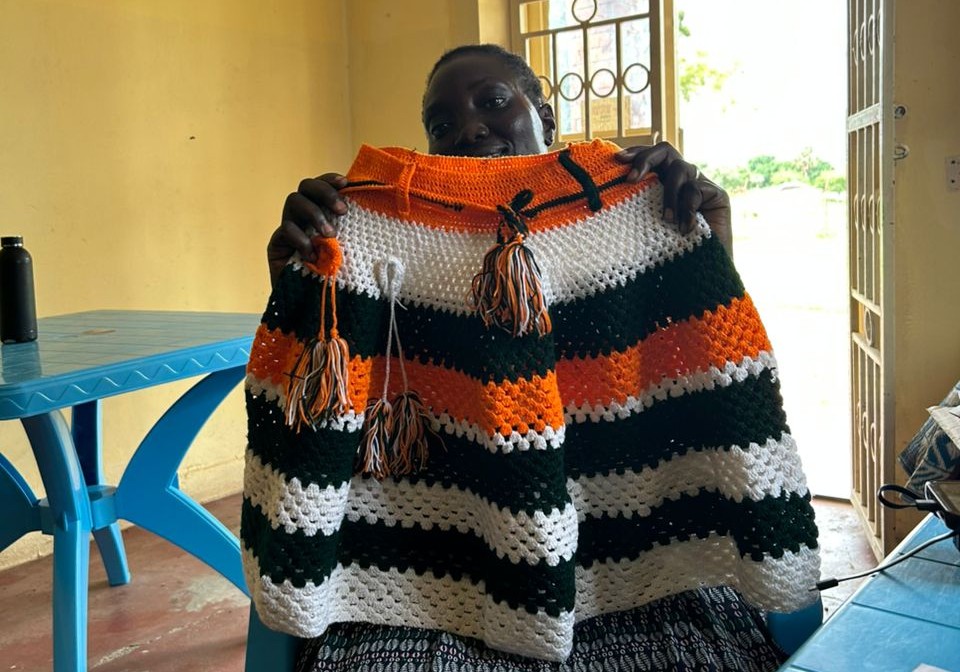
Across other livelihood activities, women engaged in bed knitting and tablecloth making are beginning to receive small orders within their communities, while adolescent girls involved in sponge making are gaining practical skills and confidence.
“People now come and order from us. I never thought I could earn money from this,” one beneficiary involved in bed knitting shared.
Social Cohesion and Community Support
Across all activities, women emphasized the importance of working together, sharing knowledge, and supporting one another through recovery.
“EVE Organization has brought us together. We encourage each other and work as a group. It has given us hope again,” said Charity Sylvan, an IDP women leader.
Organizational Perspective on Livelihood and PSS Integration
According to Naima Justin, a GBV social worker with EVE Organization for Women Development, the livelihood support forms part of a broader strategy to strengthen resilience, dignity, and recovery among vulnerable women and girls in conflict-affected communities.
“These activities play an important psychosocial role by reducing isolation, strengthening confidence, and restoring dignity among women affected by displacement,” she said.
The organization emphasized that integrating livelihood support with psychosocial support is essential in recovery contexts, as economic empowerment often contributes directly to emotional healing and social reintegration.
As women in Greater Mundri continue to apply their skills and generate income, the initiative demonstrates how targeted livelihood support can transform displacement into gradual recovery, improved well-being, and renewed hope at the household level.